

Em reformas de cozinhas modernas, as pias de embutir, com sua aparência simples, limpa e discreta, tornaram-se uma escolha cada vez mais popular entre famílias e designers.
No entanto, a questão de quanto tempo leva para umpia de cozinha embutidaO tempo de cura, muitas vezes negligenciado durante a instalação, afeta diretamente a qualidade da instalação, a segurança da carga, a vedação e a durabilidade, tornando-se uma etapa crucial que deve ser levada a sério.
Este artigo fornecerá uma análise sistemática, profissional e aprofundada do tempo de cura, ajudando você a entender completamente os ciclos de cura de diferentes materiais, os fatores que os influenciam e como determinar cientificamente o status de conclusão do processo de cura da sua pia de cozinha de embutir.
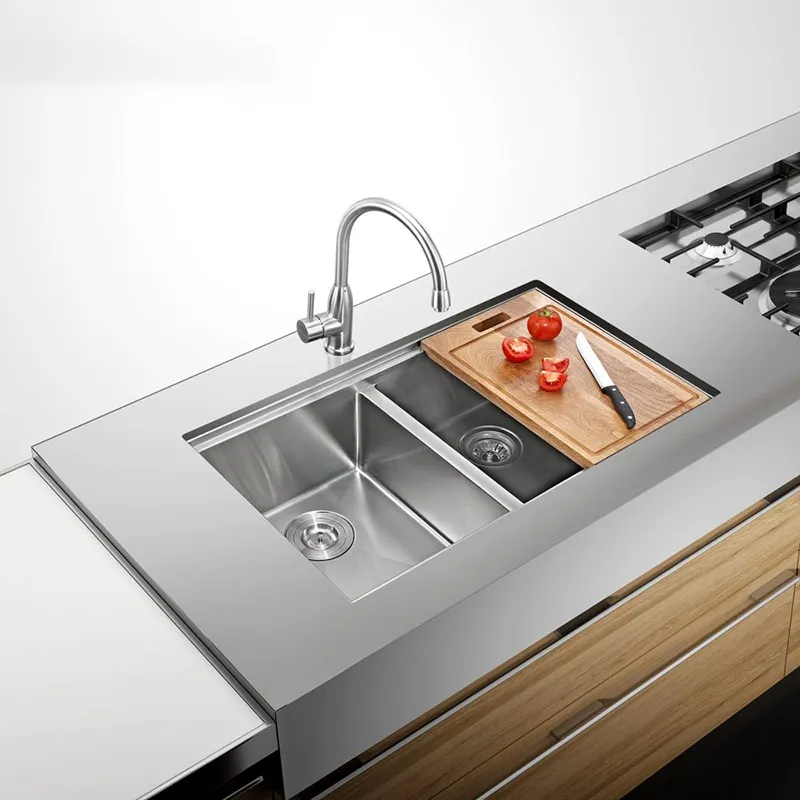
Quais são os materiais de cura utilizados em pias de cozinha de embutir?
Dois tipos principais de materiais de colagem são usados durante a instalação de pias de cozinha de embutir:
• Adesivo estrutural (epóxi/PU/polímero MS/adesivo de construção) – usado para suportar cargas e fixar.
• Selante (selante de silicone) – usado para impermeabilização e vedação de frestas
Materiais diferentes possuem propriedades químicas diferentes, e seus tempos de cura variam significativamente.
1. Tempo de cura do adesivo estrutural
O adesivo estrutural é um material fundamental para a fixação de pias de cozinha embutidas. Suas principais funções são suportar cargas, garantir a estabilidade da pia e fortalecer a conexão. Os tipos mais comuns de adesivos estruturais e seus tempos de cura são os seguintes:
Tipos de adesivos estruturais | Tempo inicial de acomodação | Tempo de cura completo |
| Adesivos estruturais epóxi bicomponentes | 3 a 6 horas | 24 a 48 horas |
| Adesivos estruturais de polímero MS | 4 a 8 horas | 24 a 72 horas |
Adesivos estruturais de poliuretano de grau arquitetônico | 8 a 12 horas | 48–72 horas |
| Adesivos estruturais de secagem rápida | 1 a 2 horas | 12 a 24 horas |
A cura completa do adesivo estrutural significa que sua capacidade de suportar carga atingiu o valor projetado, sendo capaz de suportar a pia de cozinha embutida cheia de água sem se deslocar ou se soltar.
2. Tempo de cura do selante
O selante utilizado nas bordas das pias de cozinha de embutir é um selante de silicone monocomponente, usado principalmente para impermeabilização.
Tipos de selantes | Tempo de secagem | Tempo de cura total |
| SimSilicone universal | 20 a 60 minutos | 24 horas (3 mm de espessura) |
| Acetato de silicone | 10 a 30 minutos | 12 a 24 horas |
| Silicone específico para cozinha e banheiro | 20 a 40 minutos | 24–36 horas |
O tempo de cura total do selante de silicone depende de sua espessura; para cada aumento de 1 mm, geralmente são necessárias de 12 a 24 horas adicionais de cura.
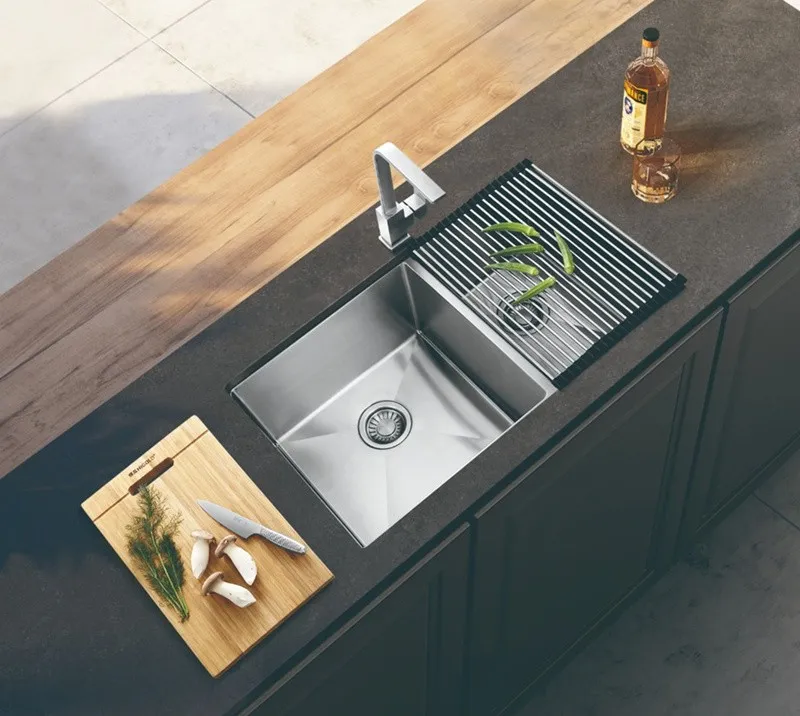
Qual é o tempo de cura total para uma pia de cozinha de embutir?
Os reparos e a vedação são feitos simultaneamente?
Resumindo: Em condições normais, as pias de cozinha de embutir precisam de 24 a 72 horas para curar completamente e atingir um estado seguro para uso.
No entanto, observe o seguinte:
• A cura do adesivo estrutural determina se a pia pode suportar peso.
• A cura do selante determina se a pia de cozinha embutida é à prova d'água.
• Nenhuma das duas pode substituir a outra, e nenhuma das etapas pode ser ignorada.
Na maioria dos casos, os instaladores profissionais recomendarão:
• Aguarde pelo menos 24 horas antes de tocar na pia.
• É melhor esperar pelo menos 48 horas antes de iniciar um teste com grande volume de água ou usar o produto com água.
• Para pias grandes e robustas de aço inoxidável, bancadas de pedra, etc., recomenda-se um período de espera conservador de 72 horas.
Quais fatores afetam a velocidade de cura de uma pia de cozinha de embutir?
Os principais fatores que afetam o tempo de cura de uma pia de cozinha de embutir incluem:
1. Temperatura interna
A temperatura ideal de cura para a maioria dos adesivos é de 20 a 25 °C.
Em temperaturas mais baixas, a velocidade de cura diminui significativamente.
Por exemplo:
• Ambiente a 10 °C → O tempo de cura pode ser prolongado em 1,5 a 2 vezes.
• Abaixo de 5 °C → Alguns adesivos podem não curar ou podem não curar completamente.
2. Umidade
A umidade tem um impacto significativo no silicone:
• Maior umidade significa cura mais rápida do silicone
• Umidade muito alta (acima de 80%) pode afetar negativamente a resistência de cura de adesivos estruturais.
3. Espessura da camada adesiva
Quanto mais espessa a cola, mais lenta será a cura, especialmente no caso do silicone.
Por exemplo:
• Espessura de 3 mm → 24 horas
• Espessura de 6 mm → 48–72 horas
4. Material para pia de cozinha de embutir
Diferentes materiais possuem diferentes níveis de adesão aos adesivos:
Materiais | Adesão ao adesivo | Desempenho de cura |
| Pia de aço inoxidável | Bom | Velocidade normal |
| Bancada de granito/quartzo | Bom | cura estável |
| Bancada de pedra sinterizada | Requer adesivo estrutural especializado. | Cura mais lenta |
| bancada de madeira | Requer pré-tratamento | O tempo de cura é mais afetado pela temperatura e umidade. |
5. Marca e formulação do adesivo
Adesivos de uso profissional têm tempos de cura mais estáveis, enquanto adesivos de qualidade inferior podem prolongar o tempo de cura ou até mesmo não atingir resistência suficiente.
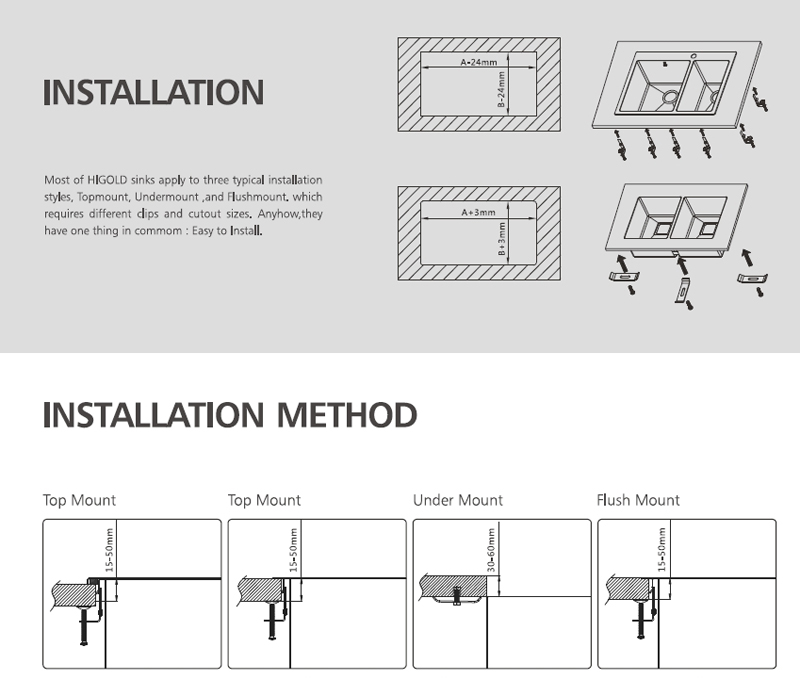
Como determinar se uma pia de cozinha de embutir está completamente curada?
Para determinar se uma pia de cozinha de embutir está completamente curada, avalie os seguintes pontos principais:
1. O adesivo estrutural endureceu completamente?
As características incluem:
• Já não oferece a mesma elasticidade ao ser pressionado.
• Não foram deixadas impressões digitais
• Superfície dura
Sem cheiro perceptível de adesivo
2. A superfície do selante está seca?
Métodos de avaliação:
• A superfície não é pegajosa ao toque
• O selante possui um brilho uniforme
• Não há umidade nas bordas das frestas.
3. A pia é estável e não se desloca facilmente?
Após a cura completa, a cozinha pia de embutirNão deve apresentar qualquer oscilação ou afundamento, por menor que seja.
4. Os suportes inferiores podem ser removidos com segurança?
Muitos instaladores utilizam suportes temporários durante o período de cura; estes só podem ser removidos após a cura completa.
A que detalhes devem ser prestados atenção durante o período de cura de uma pia de cozinha de embutir?
O controle preciso durante o período de cura continua sendo crucial. Mesmo pequenas perturbações durante o processo de cura podem danificar a estrutura da camada adesiva, levando a consequências graves como descolamento, infiltração de água e alargamento de fendas.
Portanto, os seguintes detalhes devem receber atenção especial durante a fase de cura:
1. Mantenha um ambiente estável na bancada.
As pias de cozinha de embutir são fixadas na parte inferior da bancada. Se o material da bancada empenar, vibrar ou se mover, isso afetará diretamente a qualidade da cura final da camada adesiva. Isso é especialmente verdadeiro para bancadas de quartzo, granito ou pedra. Se outros trabalhos de construção continuarem no mesmo dia da instalação (por exemplo, cortes, furos), a vibração fará com que o adesivo se desloque, afetando a estabilidade da pia.
2. Não submeta a bancada a pressão durante o processo de cura.
Durante a fase de cura, não se devem colocar objetos pesados sobre a bancada da cozinha, pois a pressão será transmitida aos pontos de fixação da pia de embutir. As bancadas de mármore, em particular, são relativamente frágeis; a distribuição inadequada de peso pode causar microfissuras na área de adesão.
3. Evite atividades que possam gerar umidade na cozinha.
Atividades como ferver grandes quantidades de água ou cozinhar alimentos no vapor causam flutuações repentinas na umidade do ar. Embora a umidade ajude na cura do silicone, mudanças drásticas na umidade podem afetar a estabilidade da reação química dos adesivos estruturais. Portanto, a cozinha deve ser bem ventilada durante a cura e atividades que geram muito vapor devem ser evitadas ao máximo. 4. Não toque no fundo da pia.
Qualquer tipo de pressão por contato, como levantar, apertar ou tentar verificar a estabilidade, interromperá o processo de cura do adesivo. Especialmente em pias de cozinha de embutir, antes de atingirem a resistência estrutural projetada do adesivo, mesmo um leve contato pode causar microdeslocamentos irreversíveis, reduzindo significativamente o efeito final da cura.
Quais ações durante o período de cura podem impedir a cura completa de pias de cozinha de embutir?
As seguintes ações prolongarão o tempo de cura ou até mesmo causarão falha e devem ser evitadas:
Não deixe que a pia entre em contato com grandes quantidades de água em um período de 24 horas.
A água irá infiltrar-se na camada adesiva, reduzindo a resistência final da cura.
Não coloque objetos pesados na pia durante o processo de cura.
Por exemplo:
• Tábua de corte
• Utensílios de cozinha
• Desinfetantes
• Acessórios para lava-louças
O peso causará o deslocamento da camada adesiva, afetando sua estabilidade.
Não remova os suportes sem autorização.
A remoção dos suportes antes da cura completa pode fazer com que a pia se desprenda.
Não aplicar em ambientes com baixa temperatura e alta umidade.
Isso pode resultar em cura incompleta ou esbranquiçamento da superfície adesiva.
Os diferentes tipos de pias de cozinha de embutir têm tempos de cura diferentes?
Sim, diferentes tipos de pias de cozinha de embutir têm tempos de cura diferentes. Isso está diretamente relacionado ao peso da pia, ao material e à aderência do adesivo.
1. Pias de cozinha de aço inoxidável para instalação sob a bancada
• Leve
• Boa adesão
• Velocidade de cura normal
Normalmente, leva de 24 a 48 horas para curar completamente.
2. Pias de cozinha de granito embutidas
• Mais pesado
• Requer adesivo estrutural mais forte
Normalmente, 48 a 72 horas é considerado um período seguro.
3. Pias de cozinha de cerâmica de embutir
• Muito pesado
• Requisitos de alta resistência para a cura
Recomenda-se aguardar pelo menos 72 horas.
4. Pias de cozinha duplas de embutir
Devido ao aumento de peso, o período de cura costuma ser mais longo:
• 48–72 horas
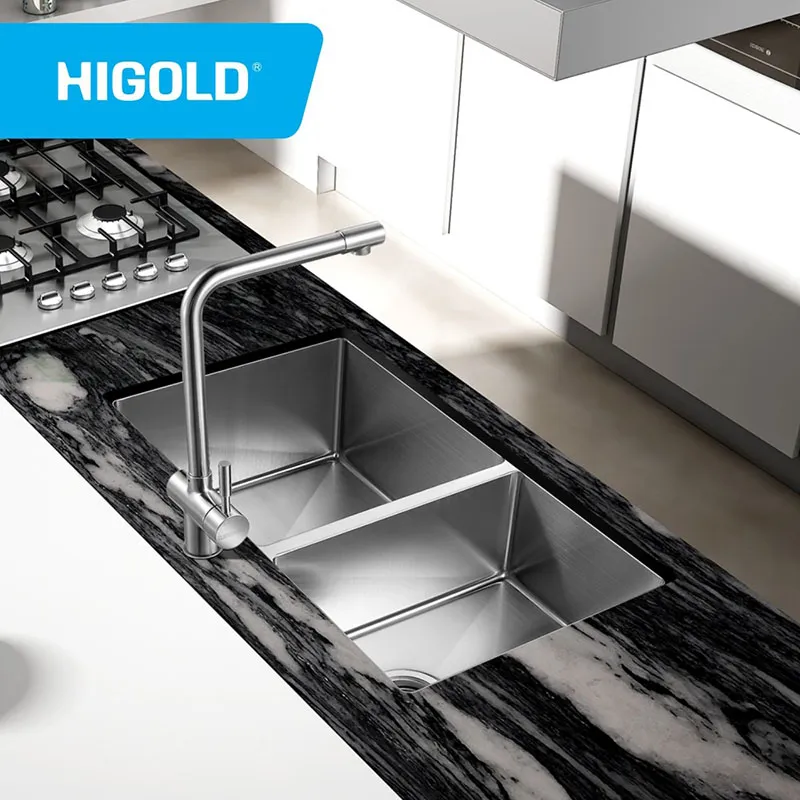
É possível acelerar o processo de cura de pias de cozinha de embutir?
Como reduzir o tempo de cura?
A cura é uma reação química e não pode ser completamente acelerada, mas o tempo pode ser reduzido dentro de uma margem razoável.
Os seguintes métodos são seguros e viáveis:
✔ Controle a temperatura ambiente entre 20 e 25 °C.
A cura ocorre mais rapidamente nessa temperatura.
✔ Aumente a umidade moderadamente (eficaz para silicone).
Você pode colocar uma tigela com água ao redor do aparelho para aumentar a umidade, mas não borrife água.
✔ Utilize um adesivo estrutural profissional de secagem rápida.
No entanto, a qualidade deve ser confiável para evitar resistência insuficiente.
✔ Mantenha uma boa ventilação.
Evite o acúmulo de gases adesivos, que podem afetar a cura.
Quanto tempo leva para uma pia de embutir curar completamente?
As conclusões finais são as seguintes:
1. Tempo de cura padrão
• 24–72 horas
2. Cura rápida (adesivos específicos)
• 12–24 horas
3. Pias robustas de cuba dupla
• 48 a 72 horas ou mais
4. Recomendação mais segura
Caso tenha dúvidas sobre o tipo de adesivo ou se a temperatura ambiente é adequada, aguarde pelo menos 48 horas.
Quais são alguns equívocos comuns sobre o processo de cura de pias de embutir?
Muitas pessoas acreditam que a instalação de uma pia de cozinha embutida é um processo simples de aplicar adesivo, esperar e pronto, mas na verdade existem muitos equívocos comuns.
Conceito errôneo 1: Acreditar que a secura da superfície significa cura completa.
Muitos adesivos têm um tempo de secagem superficial de apenas alguns minutos a dezenas de minutos, mas isso forma apenas uma película fina na superfície. A cura interna completa pode levar dezenas de horas ou até mesmo dias. Avaliar o estado de cura de uma pia de cozinha embutida apenas pelo tato pode levar à remoção acidental dos suportes, forçando o adesivo estrutural a suportar peso antes de atingir a resistência à tração, causando afundamento ou afrouxamento.
Conceito errôneo 2: A temperatura ambiente não é importante.
A temperatura é um dos fatores mais cruciais que afetam a velocidade de cura do adesivo. Muitos usuários fazem reformas no inverno, mas ainda estimam o tempo de cura com base no verão, resultando em cura insuficiente do adesivo estrutural. Em baixas temperaturas, a velocidade de cura diminui significativamente e pode até mesmo não atingir a resistência necessária.
Conceito errôneo 3: Usar o tipo errado de selante
Algumas pessoas usam erroneamente cola para vidro, silicone comum ou adesivo decorativo barato como selante para pias de cozinha de embutir. Na verdade, somente o silicone de grau alimentício e para banheiro possui propriedades antimofo, resistentes à água e ao óleo. Adesivos inadequados podem causar mofo, descoloração e rachaduras nas bordas após a cura.
Conceito errôneo 4: Remover os suportes muito cedo durante a cura.
O objetivo dos suportes é impedir que a pia afunde devido à gravidade durante a cura. Retirá-los prematuramente significa que o adesivo estrutural não forneceu suporte suficiente. Essa é uma das principais razões pelas quais as pias de cozinha de embutir se soltam.
A Higold exporta pias e torneiras para o mundo todo?
Sim. A Higold exporta pias de aço inoxidável, torneiras SUS304 e acessórios de cozinha para mais de 80 países. Nossa equipe de logística cuida da documentação, embalagem e coordenação do envio para dar suporte às compras internacionais. Compradores globais escolhem a Higold pela confiabilidade, preços competitivos da China e soluções de pias de cozinha de alta qualidade.

